
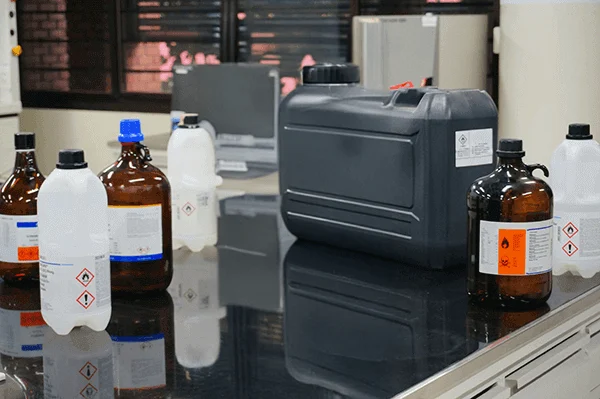
Hazard communication law requires more than placing warning stickers on chemical containers. Covered employers must create a system that tells workers what hazardous chemicals are present, what dangers they create, and how employees can obtain information needed to work safely.
OSHA’s Hazard Communication Standard, 29 CFR 1910.1200, is the main federal framework for many U.S. workplaces.
What Does OSHA Hazard Communication Require?
The standard addresses hazard classification, labels, safety data sheets, written hazard communication programs, and employee information and training.
OSHA amended the standard in 2024 and later extended several implementation deadlines in January 2026. Under the current rule, employers that need to update workplace labeling, programs, or training for newly identified hazards involving substances have until November 20, 2026. Later deadlines apply to mixtures.
Employers should use OSHA’s current Hazard Communication Standard rather than relying on an old compliance checklist.
Labels Must Communicate the Relevant Hazard
Labels help workers recognize hazards before opening or handling a chemical. Requirements can differ between shipped containers and workplace labeling systems.
Employees searching general regional information may encounter safety discussions online, but workplace chemical labels need to satisfy the rules applicable to the employer’s actual chemical inventory.
Labels should also correspond with the material identified on the safety data sheet. A container marked only with an internal nickname can cause confusion if employees cannot connect it to the written hazard information.
Special rules may apply to small containers and particular labeling situations under OSHA’s revised standard.
Safety Data Sheets Must Be Accessible
Safety data sheets provide structured information about chemical hazards, handling, exposure controls, emergency measures, and other characteristics.
Access should work during the shift, not merely when the safety manager is present. A business may review online publishing resources during general research, but employees still need access to the SDS information required for workplace chemicals.
| HazCom Element | Main Function | Frequent Problem |
|---|---|---|
| Container label | Identifies hazards | Missing or unclear label |
| Safety data sheet | Provides chemical information | Outdated or inaccessible file |
| Written program | Explains workplace system | Doesn’t match actual practice |
| Training | Prepares employees | Generic, incomplete instruction |
Employers using electronic SDS systems should consider how workers obtain information during network outages, emergencies, or work in areas without convenient computer access.
Training Must Connect Rules to Real Work
Hazard communication training should help employees understand the hazardous chemicals they may encounter and the workplace’s communication system.
Workers can encounter safety information through regional digital media, but employer training cannot simply be replaced with unrelated reading material.
Training becomes more useful when it addresses the containers, tasks, labels, SDS access methods, and hazards employees actually encounter. OSHA’s rule also requires additional training when newly identified hazards make updates necessary under the applicable provisions.
Where Hazard Communication Programs Break Down
A common mistake is maintaining a written program that no longer matches the facility. New chemicals arrive, old products disappear, departments transfer materials into secondary containers, and SDS collections slowly become outdated.
Another misconception is that providing an SDS binder automatically completes the employer’s responsibility. Labels, employee information, training, and the written program work together.
Contractor-heavy workplaces may also require careful coordination because employees from several companies can encounter hazardous chemicals at the same site.
When Should Compliance or Legal Help Be Considered?
Review may be appropriate after a chemical exposure, OSHA inspection, missing SDS discovery, widespread labeling failure, employee complaint, or notice that chemical classifications have changed.
Because OSHA’s revised Hazard Communication Standard is still moving through phased compliance dates in 2026, businesses should verify which deadline applies to substances, mixtures, manufacturers, distributors, or employers before relying on older implementation schedules.
Frequently Asked Questions
Does every workplace chemical need an OSHA shipping label?
Not necessarily. The standard distinguishes among situations, including shipped containers and alternative workplace labeling. Employers should determine which labeling provision applies to each container and use.
Must employees receive a paper copy of every SDS?
The key issue is accessibility under the standard. Electronic systems may be used in appropriate circumstances, but employees need effective access to required safety information during their work.
When should hazard communication training be updated?
Training may be required when workers are initially assigned to covered work and when new hazards are introduced or newly identified in circumstances addressed by the standard.
Make Hazard Information Usable
A compliant program should function on the shop floor, not merely in a policy binder. Check the chemical inventory against SDS files, inspect workplace containers, confirm current OSHA deadlines, and ask employees whether they actually know where hazard information is found.
Clear communication matters most before an exposure occurs.
This article provides general legal information and is not a substitute for advice from a qualified attorney regarding a specific situation.